5 E-Commerce Packaging Automation Myths Blocking Growth for Mid-Tier Players

Quick Answer: E-commerce fulfilment operations processing 1,000 to 5,000 orders per day do not need massive, multi-million-pound capital outlays to automate. Modern packaging automation has shifted from rigid, enterprise-only infrastructure to compact, modular machinery that integrates directly into existing warehouse footprints. By automating repetitive touchpoints—such as bag forming, invoice insertion, sealing, and shipping label application—growing brands can process 10 orders in under 60 seconds (a 60% cycle-time reduction).
At international logistics exhibitions like LogiMAT, legacy automation suppliers heavily promote a narrow narrative that high-throughput sortation and automated packaging lines are luxury assets reserved exclusively for tier-one global players. They pitch long, highly disruptive end-to-end operational diagnostics, custom engineering overhauls, and seven-figure investments.
For a mid-tier e-commerce brand or a growing third-party logistics (3PL) fulfilment house, this enterprise-centric sales approach can lead to expensive strategic paralysis. Decision-makers often assume they are "too small" for automation, believing their building footprint cannot accommodate the necessary machinery, or that their daily order volumes are insufficient to justify the capital expenditure.
As customer fulfilment windows contract and regional regulatory frameworks change, relying on manual labour to assemble, seal, and label shipments acts as a hard ceiling on warehouse capacity.
Modern engineering has democratised automation. The operational question is no longer about hitting a distant enterprise volume threshold; it is about eliminating the daily manual touch points that quietly erode fulfilment margins.
Below, we dismantle the five primary myths blocking mid-market growth and outline the concrete economics of right-sized packaging automation.
Myth 1: Our Daily Volume is Too Small to Justify E-Commerce Packaging Automation
The traditional metric used by legacy vendors states that packaging automation is only viable for facilities processing tens of thousands of parcels per shift. This calculation is obsolete. Modern compact bagging machinery is engineered explicitly to unlock ROI for mid-tier operators shipping hundreds—not tens of thousands—of orders per day.
When an operation relies completely on manual labour, scaling up to handle seasonal volume spikes or a new marketplace contract requires a linear increase in headcount. Managers must recruit, train, and manage temporary staff, set up temporary packing tables, and absorb rising overtime expenses.
Compact automated packaging systems change the economics of warehouse growth. Instead of expanding headcount, automation expands the capacity of your existing workforce. A compact automated bagging line allows a single operator to perform tasks that previously required three or four manual packers.
By taking over the highly repetitive, mechanical steps of fulfilment, automation guarantees consistent throughput regardless of seasonal labour availability.
Speak to Emerdis Packaging Automation Experts on how you can protect margins from seasonal labor spikes
Myth 2: Packaging Automation Requires a Multi-Million-Pound Investment
The belief that warehouse automation demands seven-figure capital expenditures prevents many e-commerce operations from modernising their workflows. In reality, entry-level, modular packaging automation sits within the same budget range as a single warehouse worker’s annual labour cost.
Rather than adding another permanent head to a manual packing table—an ongoing overhead that compounds year-on-year—investing in a compact bagging system establishes a fixed-cost asset. This system operates continuously across multiple shifts without fatigue, maintains absolute consistency, and eliminates human errors.
Furthermore, forward-thinking logistics engineering relies on modular architecture. Operations managers do not need to invest heavily upfront to build for hypothetical future capacity. You can deploy a single compact machine to solve your immediate bottleneck today, confident that you can seamlessly integrate additional modular units, upstream dimensioning systems, or downstream automated parcel sorting systems as your client contracts expand.
Myth 3: We Lack the Physical Floor Space for Machinery
Many fulfilment managers reject the idea of automation because their current facility footprint is fully utilised. They picture massive, fixed conveyor lines that cut through the warehouse floor and require expensive building modifications.
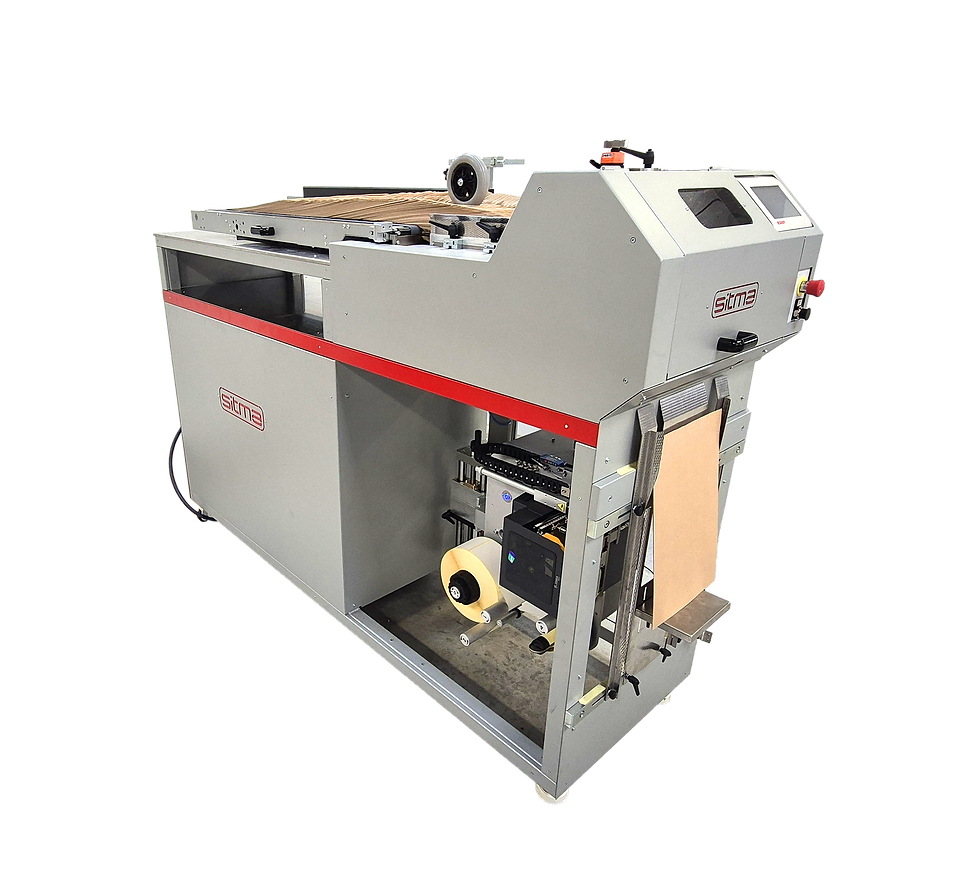
Modern entry-level packaging machinery is specifically designed for high-density efficiency. These compact units occupy roughly the same physical footprint as a standard manual packing bench. They are engineered to plug directly into your existing infrastructure and ambient workflows without requiring structural modifications.
Crucially, many of these systems are built with industrial caster wheels, allowing them to be moved across the warehouse floor as workflows dictate. If your pick paths change, or if a specific promotional event requires a complete re-engineering of your outbound dock, the machine can be repositioned within minutes. Instead of consuming valuable real estate, compact automation maximises vertical and horizontal spatial density, turning a restricted layout into a high-throughput fulfilment node.
Check how Automated Packaging can work in your warehouse layout with the Emerdis Packaging expert team.
Myth 4: Implementation od E-Commerce Packaging Automation is Too Complicated
The fear of prolonged operational downtime, complex software integrations, and a heavy internal engineering burden keeps many operations manual. fulfilment teams cannot afford to halt shipments for weeks while software engineers attempt to link new hardware with legacy systems.
Modern automation platforms bypass this friction through open-architecture interfaces and no-code API integrations. High-performance compact packaging systems communicate directly with standard mid-market Warehouse Management Systems (WMS) and regional carrier platforms.
By utilising an intelligent communication layer, such as the Emerdis SortStream Warehouse Control System (WCS), hardware deployment requires minimal configuration. The system translates high-level data instructions into real-time physical execution in milliseconds. Operators can be fully trained on the intuitive touchscreen interfaces within a single shift, avoiding implementation delays and ensuring your facility maintains its strict dispatch Service Level Agreements (SLAs).
Myth 5: Manual Packing Benches are More Flexible
A common operational argument is that human workers are inherently more flexible than machines when handling irregular items, multiple order components, or custom packaging profiles. While human operators excel at managing exceptions, forcing them to spend their shifts executing repetitive mechanical actions is a severe misallocation of labour.
In a traditional 100% manual packing setup, a worker must retrieve items, select the correct mailer bag, fold and insert printed invoices, seal the adhesive strip, and manually apply the shipping label. This multi-step process introduces frequent bottlenecks, particularly when order volumes surge. Under pressure to meet carrier collection windows, human operators face higher error rates, resulting in misapplied labels and shipping discrepancies that damage customer excellence.
An automated packaging cell re-engineers this workflow into a highly efficient, operator-led process:
Upstream Consolidation: Pickers deliver batches of items and order documentation directly to a compact buffer area.
Single-Pass Execution: The machine operator scans the order paperwork. The automated packaging system instantly generates the correctly sized polybag or paper mailer, the operator places the items inside, and the system automatically seals, prints, and applies the shipping label in a single pass.
This setup reduces the processing time for ten orders from 2.5 minutes down to less than 60 seconds. The machine runs steadily throughout the shift, absorbing the repetitive mechanical workload. This unlocks invisible capacity within your current team, allowing experienced warehouse personnel to focus entirely on complex fulfilment exceptions, such as processing returns, conducting quality control checks, or assembling specialised multi-item promotional bundles.
Case Study: Re-Engineering Outbound Throughput for a Mid-Tier Fashion Brand
To understand the reportable ROI of compact automation, we can analyse a live deployment for a scaling fashion e-commerce brand.
The Operational Challenge
The brand was processing approximately 30,000 orders per month. Their outbound workflow relied on six dedicated packers per 8-hour shift executing every step by hand. During peak sales periods, the manager added two temporary workers to the line.
Despite the increased headcount, queues formed at the packing tables, order accuracy dropped, and outbound congestion delayed carrier handoffs. Crucially, the business was forced to turn down new client contracts because the packing area had hit its absolute physical capacity.
The Deployment of E-Commerce Packaging Automation
The brand deployed a single compact eCommerce Packaging Automation system within the exact same warehouse footprint. The multi-step manual process was replaced with a streamlined, machine-assisted workflow.
The Quantifiable Results
By replacing manual friction with automated precision, the facility captured immediate, reportable performance gains:
60% Reduction in Cycle Time: The time required to process ten orders fell from 150 seconds to under 60 seconds.
Labour Optimisation: The facility successfully processed its baseline 30,000 monthly orders using just four packers instead of six. The two remaining workers were permanently moved upstream to high-value picking and quality verification nodes.
Scalable Headroom: With the automated bagging system providing a steady buffer of capacity, the brand can now scale toward 45,000 monthly orders without hiring additional staff or adding shifts.
By converting their packing area from an operational bottleneck into a scalable growth engine, the brand's leadership team can aggressively onboard new sales channels with total operational certainty.
Partner with Emerdis E-Commerce Packaging Automation experts to replicate these throughput gains for your business.
The Hidden Cost of Staying Manual
For mid-market operators, the real barrier to growth is not the cost of automation; it is the hidden cost of remaining entirely manual. Every delayed shipment, mislabeled parcel, and hour of avoidable peak-season overtime directly erodes your profitability.
You do not need an enterprise footprint or a multi-million-pound capital allocation to modernise your logistics. Right-sized, compact packaging systems offer an aggressive path to efficiency, frequently paying for themselves within 12 to 18 months solely through labour optimisation and error elimination.
If you are currently paying manual labour rates for steps that a compact machine can execute faster, more reliably, and with zero errors, you are already big enough to automate.
Frequently Asked Questions
What types of packaging substrates can compact automated bagging systems handle?
Modern compact systems offer high substrate flexibility. They can seamlessly process standard polybags, durable poly-poly mailers, and highly sustainable options, including 100% kerbside-recyclable heat-sealable paper, padded paper mailers, and compostable biofilms, allowing your operation to align with evolving environmental regulations without sacrificing line speed.
How does a compact automated packaging system prevent mislabelling?
In a manual setup, an operator might print a batch of labels and accidentally apply them to the wrong parcels. Automated packaging systems eliminate this risk through single-pass execution. The system only prints and applies the shipping label once the specific order barcode is scanned and the item is placed inside the bag, ensuring a 99.9% data-match accuracy rate.
Can these compact packaging systems integrate with older, legacy WMS platforms?
Yes. By utilising an intelligent warehouse control system layer, such as Emerdis SortStream WCS, modern packaging machinery can connect to legacy WMS, ERP, or TMS environments via documented APIs. This avoids custom-coded plugins, eliminates software latency, and ensures smooth real-time data sync.
What happens if our product sizes vary significantly from order to order?
Emerdis offers packaging lines with intelligent scanning sensors that dynamically read the variable height and length of consolidated orders. The automated machinery automatically right-sizes the film or paper wrap to fit the exact dimensions of the product profile. This minimises material waste, reduces volumetric shipping charges, and eliminates the need for manual sorting by size.
The content on this website is for general informational purposes only and does not constitute formal engineering, financial, or professional advice. Figures, case studies, and metrics are illustrative estimates based on specific projects; actual results will vary depending on your unique infrastructure and operational variables. Emerdis accepts no liability for any loss or damage arising from reliance on this information. For advice tailored to your specific facility, please contact sales@emerdis.com for a formal assessment.