Manual Picking vs Pick to Light — Which Is Right for Your Warehouse?

At a Glance
Manual picking typically achieves 94–96% accuracy, while Pick to Light (PTL) systems consistently reach 99–99.5%, with productivity gains of 30–50% and onboarding cut from one to three days down to four hours or less. Manual picking remains viable for low-volume, low-SKU operations — the case for PTL strengthens with volume, SKU complexity, and SLA pressure. Most sophisticated operations run both: PTL for high-velocity zones, manual for the long tail.
Manual picking works. It's worth saying that clearly before any Manual Picking vs Pick to Light comparison, because the default framing — automation good, manual bad — obscures the real decision.
The question isn't whether Pick to Light is better in the abstract. The question is whether it's better for your operation, at your volume, with your SKU mix, given your SLA commitments and your labour situation.
That's a more useful framing — and it's the one this guide uses.
How Manual Picking Works and Where It Breaks Down at Scale
Manual picking in its simplest form requires an operator to receive a pick list (paper, RF scanner, or screen), navigate to the right location, select the right item and quantity, and confirm the pick. The process is flexible, requires minimal infrastructure, and is straightforward to implement.
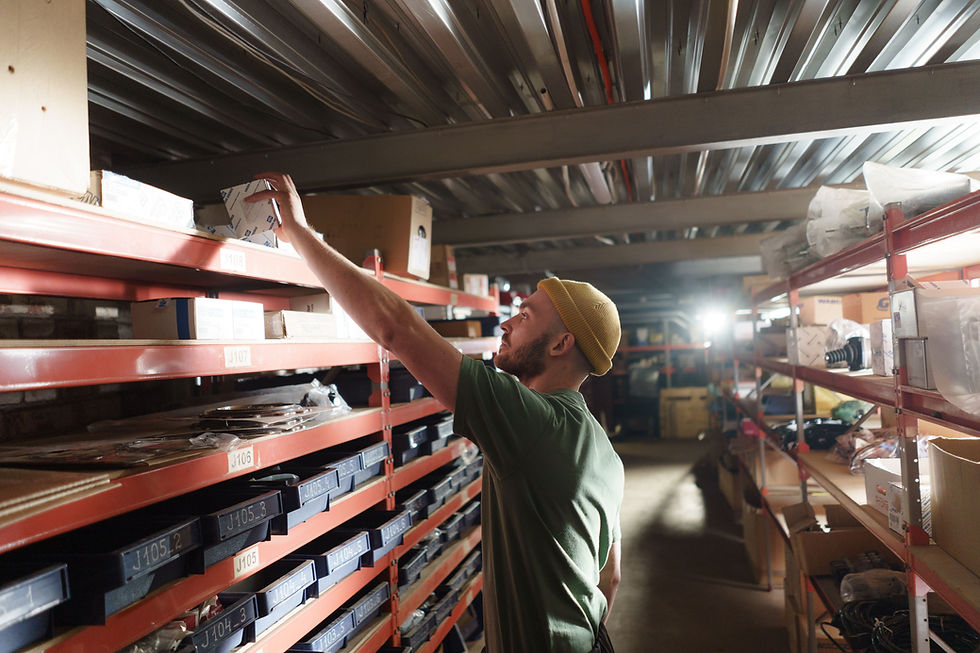
It also has a performance ceiling that becomes painful at scale.
Error Rates
Under normal conditions, manual picking produces accuracy rates of 94–96%. That sounds reasonable until you apply it to volume. At 5,000 picks per day, a 4% error rate means 200 incorrect picks — each one generating a downstream exception, a customer complaint, or a return.
Speed Limits
Manual picking speed is bounded by human movement. The further operators must travel between pick locations, the slower the throughput — and in large warehouse layouts, travel time can account for 50–60% of total picking time.
Onboarding Friction
New operators in manual environments need to learn product locations, warehouse layout, and picking conventions before reaching reliable accuracy. For high-turnover or seasonally staffed operations, this training overhead is a recurring cost.
Fatigue and Consistency
Manual picking performance degrades over a shift. Error rates climb in the final hours, particularly for repetitive tasks at high density. Automated systems don't fatigue.
None of these limitations make manual picking obsolete. They define where its performance envelope ends — and where technology makes economic sense.
A 4% error rate sounds manageable — until it's 200 wrong picks a day at 5,000 orders. Pick to Light delivers 99.9% accuracy, at any volume.
What Pick to Light (PTL) Systems Do and How They Integrate
A Pick to Light system uses LED displays mounted at each storage location to guide operators during order picking. When a pick is triggered by the WMS, the light at the relevant location illuminates, displaying the item quantity to be picked. The operator confirms the pick by pressing a button, which signals completion and advances to the next task.

At its core, a pick-to-light system is a technology-driven solution that enhances order picking accuracy and efficiency in warehouses. The system employs a light module at each SKU and order location, illuminating to indicate the quantity to be picked from that exact location.
The integration chain is straightforward: your WMS generates pick tasks, which the PTL controller receives and translates into light activation signals across the relevant pick face. Pick confirmations feed back to the WMS in real time, updating inventory and order status continuously.
Barcode scanners add an extra layer of verification to pick-to-light systems, ensuring the right item is picked and helping keep inventory records precise. In high-accuracy environments — pharmaceuticals, premium electronics, or operations with high-value return costs — this additional verification layer is standard practice.

PTL systems work within existing racking and shelving infrastructure. Installation involves mounting the display modules to shelves and connecting them to the controller network — it doesn't typically require a full warehouse reconfiguration.
Manual pickers need one to three days to learn your layout.
Pick-To-Light operators are picking at 99.9% accuracy in a few hours.
Manual Picking vs Pick to Light: Head-to-Head Comparison

The most important benefits provided by a pick-to-light system are the dramatic increases in productivity, reduction of error and accuracy of picks, ease and simplicity of training, and the increased ROI. Typical measurable productivity improvements are often as high as 30–50%.
Pick-to-light achieves percentages of 99.9% accurate orders. It's the assistive picking technology that requires the least training for new hires, facilitating their integration into your installation.
The onboarding differential is particularly significant for operations relying on temporary or seasonal labour. Training sessions can be as short as four hours or less, and operators properly trained typically perform with accuracy rates as high as 99.9%. When you're onboarding 50 temporary workers ahead of peak season, the difference between four-hour and three-day training is measurable in direct cost terms.
Manual picking is your baseline. It's not your ceiling.
PTL adds 30–50% productivity on top — without adding headcount.
When to Stick With Manual, When to Automate, and When to Combine Both
Combine both when:
This is the most common pattern in sophisticated operations. High-velocity, high-SKU zones run PTL. Slow-moving, specialist, or irregular items are handled manually. The PTL system handles 80% of volume; manual picking covers the long tail. A pick-to-light system combined with AMRs can achieve accuracy above 99.5% and boost throughput by 20–35% on mixed SKUs, while minimising picker travel time.
Implementation Considerations: Floor Space, SKU Complexity, and IT Integration

Floor space and racking:
PTL modules mount directly to existing racking. The primary space consideration is whether your pick face density allows for clear light visibility — tightly packed shelving can obscure displays. Operations with wide pick faces and high bay density may need to assess module positioning carefully.

SKU complexity:
PTL performs best in environments with stable SKU locations. Operations with high product turnover or frequent location changes require a WMS that can update the PTL mapping dynamically — which most modern systems support, but worth confirming with your vendor.

IT integration:
Pick-to-light systems provide your warehouse management system with additional data on picking rates and how they compare to paper-based options.
The integration requirement is real — your WMS must be able to send pick triggers to the PTL controller and receive confirmation signals back in real time. Most major WMS platforms support this, but the integration project should be scoped and resourced before purchase.

Operator considerations:
When you use a light system, it's difficult to maintain a high throughput and scale as your company grows since most of these systems consist of a single person working in a zone at a time, which means throughput is naturally bounded by zone design. Zone design and pick face layout are therefore critical decisions during implementation — not afterthoughts.
Emerdis supplies Isitec Pick to Light solution designed to integrate cleanly with the WMS and warehouse execution environments that EMEA fulfilment operations run, with implementation support that covers zone design, hardware installation, and IT integration — not just equipment delivery.
For more information, visit www.emerdis.com/pick-to-light or contact our experts on sales@emerdis.com.
Frequently Asked Questions
How accurate is Pick to Light compared to manual picking?
Pick to Light systems achieve 99.9% accuracy versus 94–96% for manual picking. The visual confirmation mechanism eliminates the most common error sources: picking from the wrong location and picking incorrect quantities.
How long does it take to train operators on a PTL system?
Most operations complete operator training in four hours or less. This compares to one to three days for RF scanning or paper-based manual picking, making PTL particularly valuable for operations with high staff turnover or seasonal labour needs.
Does Pick to Light work with my existing WMS?
Most modern WMS platforms support PTL integration through standard APIs. The integration project scope varies by WMS version and vendor — this should be assessed and confirmed before procurement. Emerdis's implementation team supports the full integration process.
Can Pick to Light handle a wide range of SKU types?
PTL is optimised for operations with defined, relatively stable pick locations. It performs best with small-to-medium items picked in high volume. For irregular, bulky, or very slow-moving items, a hybrid approach — PTL for core SKUs, manual for the long tail — typically produces the best overall result.
What's the ROI timeline for a Pick to Light system?
Payback period depends on volume, current error costs, and labour configuration, but typically falls in the 12–24 month range. Operations with high current error rates or significant temporary labour spend often see faster returns.
The content on this website is for general informational purposes only and does not constitute formal engineering, financial, or professional advice. Figures, case studies, and metrics are illustrative estimates based on specific projects; actual results will vary depending on your unique infrastructure and operational variables. Emerdis accepts no liability for any loss or damage arising from reliance on this information. For advice tailored to your specific facility, please contact sales@emerdis.com for a formal assessment.


